
luglugalugaaen |

sea nav gua

form

GET YOUR FREE QUOTE

We will contact you within 24 hours.

A Guide To Choosing Right Ball Valves for Your Project

Time: 27-October 2025 | Source: I-FLOW| Share

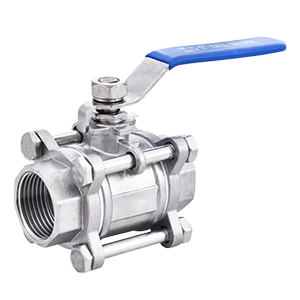
Ball valves are among the most common valve types in modern industries. They use a simple rotating ball with a bore through its center, allowing quick shut-off and precise control. Thanks to their durability, tight sealing, and easy operation, they are widely applied in water treatment, oil and gas, HVAC, chemical processing, and marine systems.

1. Material Matters

Brass Ball Valves: Best for water, air, and non-corrosive fluids. They offer affordability and long life in low- to medium-pressure systems.
Stainless Steel Ball Valves: Perfect for demanding conditions involving high temperature, pressure, or corrosive media.
PVC Ball Valves: Lightweight, non-metallic, and cost-effective, ideal for irrigation or light-duty chemical systems.
Choosing the right material ensures that the valve performs reliably within your environmental and operational conditions.

2. Connection Type

Threaded Ends: Easy to install and maintain; suited for small pipelines.
Flanged Ends: Provide strong, leak-proof connections for higher pressures.
Welded Ends: Permanent connections offering superior sealing in industrial settings.
Selecting the proper end connection helps achieve balance between convenience, cost, and system performance.

3. Port Configuration

Full Port Ball Valve: The bore matches the pipeline diameter, allowing unrestricted flow and minimal pressure drop.
Reduced Port Ball Valve: Slightly smaller bore to save cost and space, suitable for systems where flow loss is acceptable.

4. Operation and Control

Manual Ball Valves: Simple lever operation; suitable for most standard applications.
Electric or Pneumatic Actuated Valves: Used when remote control or automation is required.
Automated systems enhance precision, reduce human error, and ensure consistent operation.

5. Selecting a Reliable Valve Partner

At Qingdao I-Flow, we provide a comprehensive range of brass, stainless steel, and flanged ball valves, combining advanced design with rigorous testing under ISO 9001 quality control. Whether for commercial or industrial use, we can help you choose the best ball valve for your project.
Back To The List btn

Related News

How To Select The Right Size Knife Gate Valves
11-December 2025

How To Select The Right Size Knife Gate Valves

In many industrial systems, speed is not just an advantage—it is a necessity. When a pipeline needs to be shut off instantly to prevent backflow, equipment damage, or safety hazards, a quick closing valve becomes the frontline safeguard. These valves are engineered to close rapidly under emergency or controlled conditions, ensuring that fluid movement can be stopped at the critical moment.

View Details
Key Factors To Consider When Choosing Quick Closing Valve
10-December 2025

Key Factors To Consider When Choosing Quick Closing Valve

In many industrial systems, speed is not just an advantage—it is a necessity. When a pipeline needs to be shut off instantly to prevent backflow, equipment damage, or safety hazards, a quick closing valve becomes the frontline safeguard. These valves are engineered to close rapidly under emergency or controlled conditions, ensuring that fluid movement can be stopped at the critical moment.

View Details
What Is The Float Control Valve
10-December 2025

What Is The Float Control Valve

In many water supply systems, maintaining a stable liquid level is essential for safety, energy efficiency, and overall system performance. Among the various level-control devices available, the float control valve stands out for its reliability, simplicity, and ability to operate without external power. As industries move toward smarter and more efficient fluid management, understanding how this valve works—and the advantages it brings—has become increasingly important.

View Details
Best Practices for Installing Balancing Valves
5-December 2025

Best Practices for Installing Balancing Valves

Walk into any mechanical room, and you’ll quickly understand why balancing valves matter. They quietly determine whether an HVAC system runs smoothly or wastes energy with every cycle. While engineers design the system, it’s the installation that ultimately decides whether a balancing valve performs as intended. To help installers, contractors, and facility managers achieve consistent results, here’s a practical look at the best practices that truly make a difference on-site.

View Details
How Long Does Globe Valve Take To Open and Close
21-November 2025

How Long Does Globe Valve Take To Open and Close

When engineers choose a globe valve, they often focus on accuracy, pressure control, and durability. But once the valve is installed, another question always comes up during commissioning: “How long does this valve actually take to open and close?” It sounds simple, yet the answer influences everything—from system safety to actuator selection. In this guide, we break it down clearly and practically, based on engineering experience, manufacturer data, and real usage in industrial plants.

View Details
The Three Ship-Stopping Threats the Mud Box Fights
20-November 2025

The Three Ship-Stopping Threats the Mud Box Fights

Imagine you're on a long voyage, hundreds of miles from port. Everything is humming along until, suddenly, an alarm blares. "High Jacket Water Temperature!" What caused the multi-million dollar engine to start sweating? Often, the culprit is not a complex electronic failure but a simple blockage caused by mud, weeds, or even a rogue plastic bag.

View Details