How Pressure Relief Valves (PRVs) Work: Precision in Action
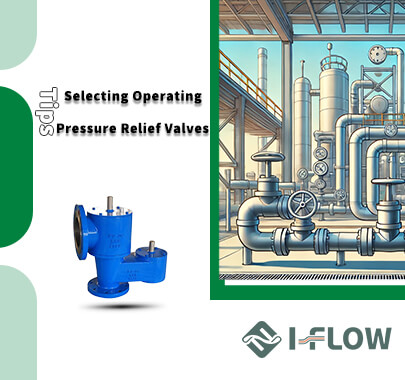
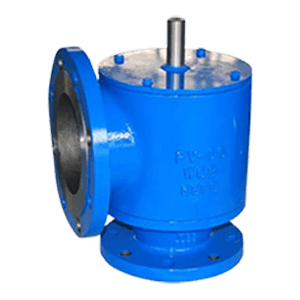
At its core, a PRV is designed to counteract overpressure—a scenario where internal pressure in a system exceeds safe limits. Its operation hinges on a delicate balance between system pressure and a pre-set resistance mechanism, ensuring activation only when necessary. Here’s a breakdown of the mechanics: Key Components and Mechanisms
- Spring-Loaded PRVs: The most common type, these rely on a compressed spring to hold the valve’s disc (or “plug”) against its seat. When system pressure rises above the spring’s force (calibrated to the system’s maximum safe pressure), the disc lifts, creating a pathway for excess fluid or gas to escape. Once pressure drops to 90-95% of the activation threshold, the spring pushes the disc back into place, sealing the valve. Spring materials vary by application: stainless steel for corrosive environments, Inconel for high temperatures (up to 1,000°F), and carbon steel for general use.
- Pilot-Operated PRVs: Used in high-pressure systems (above 1,000 psi), these include a smaller “pilot” valve that controls the main valve. The pilot monitors system pressure; when overpressure occurs, it releases pressure from the main valve’s top chamber, allowing the main disc to open. This design offers tighter control—ideal for systems where pressure must stay within a narrow range, such as natural gas pipelines or refinery distillation columns.
- Temperature-Actuated PRVs: Found in systems where heat drives pressure spikes (e.g., water heaters), these use a fusible plug or bimetallic strip. When temperature rises beyond a safe point (causing pressure to surge), the plug melts or the strip bends, triggering valve opening.
This precision ensures PRVs don’t activate unnecessarily (which wastes energy or fluid) or fail to activate (which risks disaster). For example, in a 500-gallon boiler operating at 120 psi, a PRV calibrated to 150 psi will only open if pressure spikes due to a faulty thermostat—preventing the boiler from rupturing.
Where PRVs Are Deployed: Industry-Specific Roles
PRVs are tailored to the unique demands of each industry, adapting to fluids (liquids, gases, slurries), temperatures, and pressure ranges. Here’s how they function in key sectors:
1. Power Generation: Boilers and Steam Systems
In coal, natural gas, or nuclear power plants, boilers heat water to produce high-pressure steam (often 1,000+ psi) for turbines. A PRV here acts as a last line of defense: if a turbine valve malfunctions and steam can’t exit, pressure in the boiler could skyrocket. PRVs in this setting are sized to release steam at a rate equal to the boiler’s maximum output, ensuring pressure never exceeds the vessel’s design limit. For instance, a 500 MW coal plant might use 6-8 PRVs per boiler, each rated to release 50,000 pounds of steam per hour.
2. Oil and Gas: Pipelines and Storage Tanks
Crude oil and natural gas pipelines operate under extreme pressure (up to 1,440 psi for transmission lines). PRVs here must handle volatile hydrocarbons, often in remote locations. They’re paired with “block valves” to isolate sections of pipe during maintenance and “rupture discs” (a one-time-use backup) for added safety. In storage tanks, PRVs prevent pressure buildup from temperature swings—for example, a tank holding liquefied natural gas (LNG) at -260°F will expand as it warms, and the PRV releases small amounts of gas to keep pressure stable.
3. Chemical Processing: Reactors and Mixing Vessels
Chemical plants handle corrosive, flammable, or toxic substances (e.g., chlorine, sulfuric acid) where even a small leak can have severe consequences. PRVs here are made from corrosion-resistant materials like Hastelloy or Teflon-lined steel. In a batch reactor synthesizing pharmaceuticals, for example, a PRV might release excess pressure caused by an exothermic reaction (where heat is generated), preventing the reactor’s glass lining from cracking and contaminating the batch.
4. Food and Beverage: Pasteurization and Canning
In facilities producing shelf-stable foods, high-pressure processing (HPP) and pasteurization rely on PRVs to maintain sterility. A pasteurization tank heating milk to 161°F at 50 psi uses a PRV to release pressure if the heater overheats—ensuring milk doesn’t scorch (which would ruin texture) or the tank doesn’t warp (compromising seals). In HPP systems, where pressure reaches 87,000 psi to kill bacteria, PRVs are designed to release pressure gradually to avoid damaging food packaging.



.png "luga")
 en |
en |